La Sacerdotisa: significado de la carta del tarot
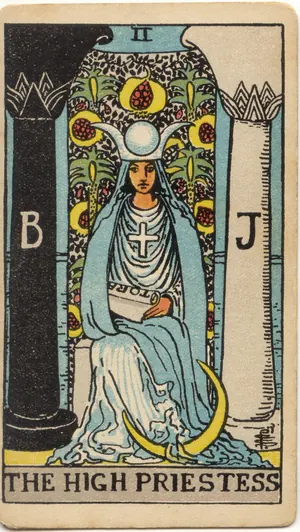
La Sacerdotisa es el arcano mayor número II (2) del tarot. Según A. E. Waite (1910), en posición normal significa: secretos, misterio, el futuro aún no revelado, la mujer que interesa al consultante, si es varón, la propia consultante, si es mujer, silencio, tenacidad, sabiduría. Invertida: pasión, ardor moral o físico, presunción, conocimiento superficial.
Contenido con fines culturales y de entretenimiento.
Descripción de la imagen según Waite
Tiene a sus pies el creciente lunar, sobre la cabeza una diadema con cuernos, con un globo en el centro, y sobre el pecho una gran cruz solar. El rollo que sostiene en las manos lleva inscrita la palabra Tora, que significa la Ley Mayor, la Ley Secreta y el segundo sentido de la Palabra. Está cubierto en parte por su manto, para mostrar que algunas cosas se dan a entender y otras se dicen. Está sentada entre las columnas blanca y negra —J. y B.— del Templo místico, y el velo del Templo está detrás de ella: está bordado con palmas y granadas. Las vestiduras son amplias y vaporosas, y el manto sugiere luz: un resplandor trémulo. Se la ha llamado la Ciencia Oculta en el umbral del Santuario de Isis, pero en realidad es la Iglesia Secreta, la Casa que es de Dios y del hombre. Representa también el Segundo Matrimonio del Príncipe que ya no es de este mundo; es la Esposa y Madre espiritual, la hija de las estrellas y el Jardín del Edén Superior. Es, en suma, la Reina de la luz prestada, pero esta es la luz de todos. Es la Luna nutrida con la leche de la Madre Supernal.
En cierto modo, es también la propia Madre Supernal, es decir, es su reflejo luminoso. Es en este sentido de reflejo en el que su nombre más verdadero y más alto en el simbolismo es Shekinah: la gloria que cohabita. Según el cabalismo, hay una Shekinah tanto arriba como abajo. En el mundo superior se llama Binah, el Entendimiento Supernal que refleja hacia las emanaciones que están debajo. En el mundo inferior es Malkuth —entendido ese mundo, a este efecto, como un Reino bendito—, y aquello con lo que es bendecido es la Gloria que en él habita. Hablando místicamente, la Shekinah es la Esposa Espiritual del hombre justo, y cuando él lee la Ley, ella le da el sentido Divino. Hay ciertos aspectos en los que esta carta es la más alta y la más santa de los Arcanos Mayores.
Texto original (inglés)
She has the lunar crescent at her feet, a horned diadem on her head, with a globe in the middle place, and a large solar cross on her breast. The scroll in her hands is inscribed with the word Tora, signifying the Greater Law, the Secret Law and the second sense of the Word. It is partly covered by her mantle, to show that some things are implied and some spoken. She is seated between the white and black pillars—J. and B.—of the mystic Temple and the veil of the Temple is behind her: it is embroidered with palms and pomegranates. The vestments are flowing and gauzy, and the mantle suggests light—a shimmering radiance. She has been called Occult Science on the threshhold of the Sanctuary of Isis, but she is really the Secret Church, the House which is of God and man. She represents also the Second Marriage of the Prince who is no longer of this world; she is the spiritual Bride and Mother, the daughter of the stars and the Higher Garden of Eden. She is, in fine, the Queen of the borrowed light, but this is the light of all. She is the Moon nourished by the milk of the Supernal Mother.
In a manner, she is also the Supernal Mother herself—that is to say, she is the bright reflection. It is in this sense of reflection that her truest and highest name in bolism is Shekinah—the co-habiting glory. According to Kabalism, there is a Shekinah both above and below. In the superior world it is called Binah, the Supernal Understanding which reflects to the emanations that are beneath. In the lower world it is Malkuth—that world being, for this purpose, understood as a blessed Kingdom—that with which it is made blessed being the Indwelling Glory. Mystically speaking, the Shekinah is the Spiritual Bride of the just man, and when he reads the Law she gives the Divine meaning. There are some respects in which this card is the highest and holiest of the Greater Arcana.
Descripción según Mathers: «La Suma Sacerdotisa»
Una mujer coronada con una alta mitra o tiara (con la cabeza rodeada por un velo), una estola (o una cruz solar) sobre el pecho y el Libro de la Ciencia abierto en la mano. Representa la Ciencia, la Sabiduría o el Conocimiento.
Texto original (inglés)
A woman crowned with a high mitre or tiara (her head encircled by a veil), a stole (or a solar cross) upon her breast, and the Book of Science open in her hand. She represents Science, Wisdom, or Knowledge.
Significado adivinatorio
Waite (1910)
Secretos, misterio, el futuro aún no revelado; la mujer que interesa al consultante, si es varón; la propia consultante, si es mujer; silencio, tenacidad; misterio, sabiduría, ciencia.
Texto original (inglés)
Secrets, mystery, the future as yet unrevealed; the woman who interests the Querent, if male; the Querent herself, if female; silence, tenacity; mystery, wisdom, science.
Mathers (1888): La Suma Sacerdotisa
Ciencia, Sabiduría, Conocimiento, Educación
Texto original (inglés)
Science, Wisdom, Knowledge, Education
La Sacerdotisa invertida
Waite: Pasión, ardor moral o físico, presunción, conocimiento superficial.
Mathers: Presunción, Ignorancia, Torpeza, Conocimiento superficial
Preguntas frecuentes sobre esta carta
Correspondencias
- Número
- II (2)
- Letra hebrea
- Gimel
- Sendero del Árbol de la Vida
- 13
- Atribución (Golden Dawn)
- Luna
- Numerología
- Número 2
Astrología relacionada
Combinaciones con otras cartas
- La Sacerdotisa y El Mago
- La Sacerdotisa y La Emperatriz
- La Sacerdotisa y Dos de Bastos
- La Sacerdotisa y Dos de Copas
- La Sacerdotisa y Dos de Espadas
- La Sacerdotisa y Dos de Oros
- La Sacerdotisa y El Loco
- La Sacerdotisa y El Emperador
- La Sacerdotisa y El Hierofante
- La Sacerdotisa y Los Enamorados
- La Sacerdotisa y El Carro
- La Sacerdotisa y La Fuerza
Cartas relacionadas
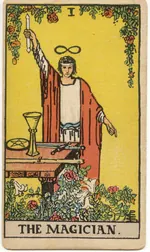 El Mago
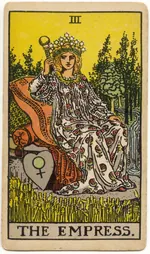 La Emperatriz
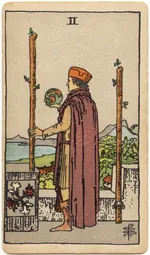 Dos de Bastos
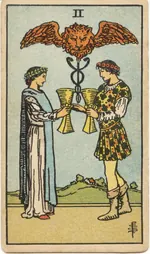 Dos de Copas
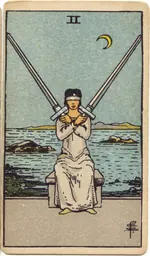 Dos de Espadas
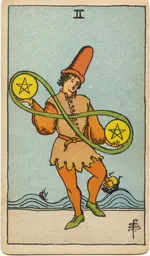 Dos de Oros
Más relaciones
Edición: Sophia · Última actualización: